Booking choice: The pasta cooking class, 3 hours. Book this Tour details
Bologna takes its ragu seriously enough to file it with a notary. On 17 October 1982 the Bologna delegation of the Accademia Italiana della Cucina deposited the "classic" recipe at the city's Chamber of Commerce. Forty-one years later it replaced it: the notarial deed for the renewed recipe was handed over on 20 April 2023.
The changes are small and practical. The bans are not. And the pasta question, tagliatelle or spaghetti, has an official answer.
The quick answer
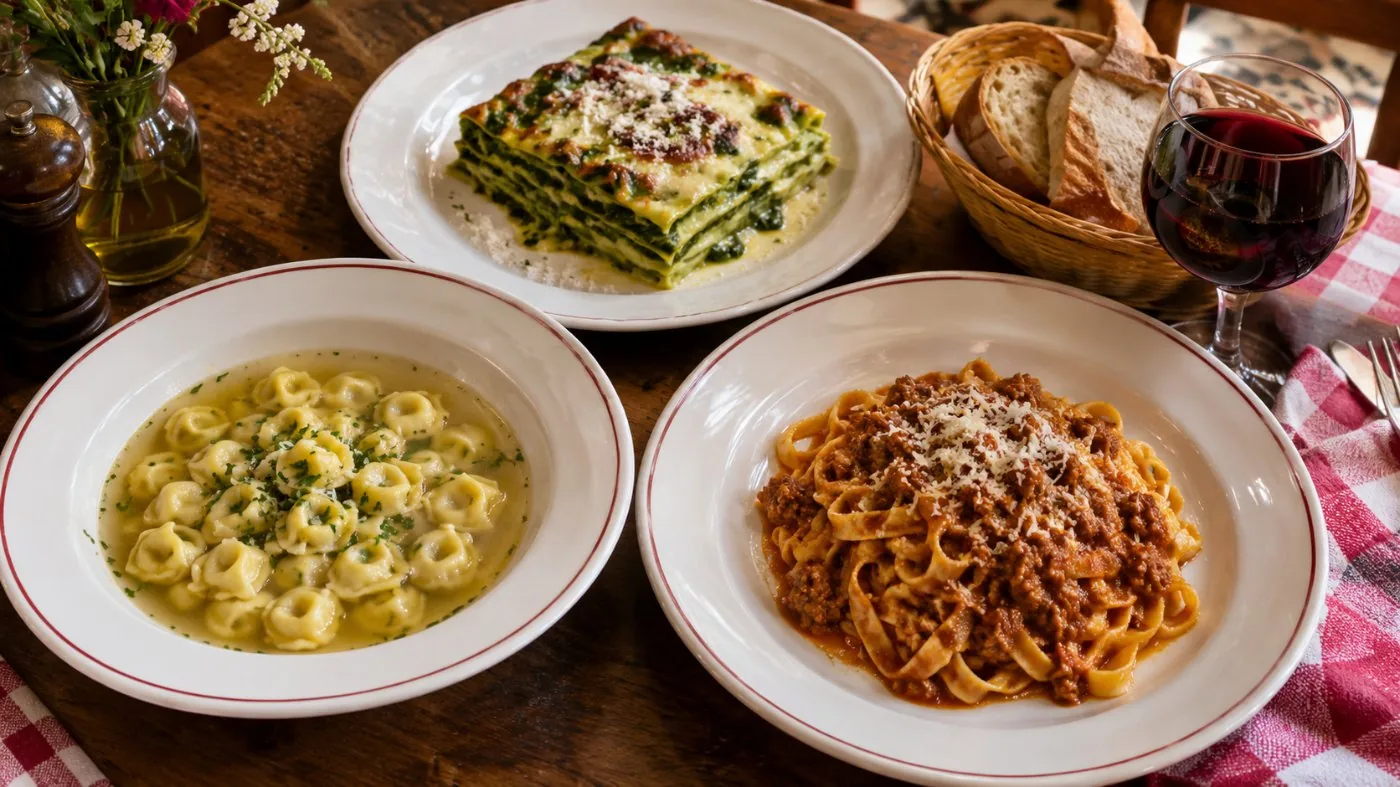
The 2023 recipe uses coarse-ground beef, fresh pancetta, onion, carrot and celery, red or white wine, passata and tomato paste, with whole milk optional, cooked for about two hours. Garlic, rosemary, parsley, brandy, flour and smoked pancetta are not allowed. Serve it on tagliatelle; spaghetti bolognese is not a Bologna dish. You can taste ragu on several tours, and the pasta class serves it on the tagliatelle you roll yourself.
What changed in the official ragu recipe in 2023?
The meat cut, the wine colour and the fat. The 1982 recipe asked for beef "cartella" and dry white wine; the 2023 one takes coarse-ground beef, red or white wine, and olive oil.
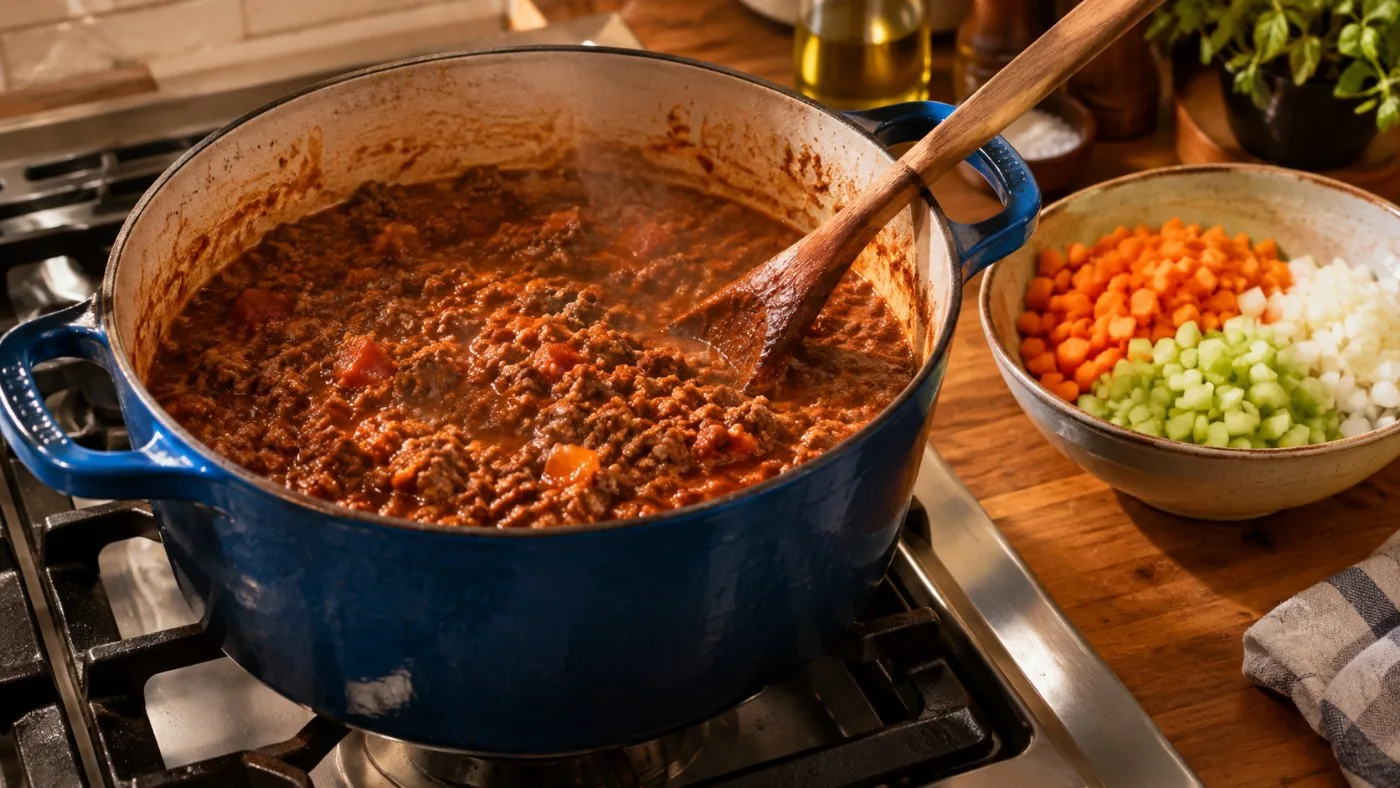
The Bologna Chamber of Commerce publishes the 2023 text: 400 g of coarsely ground beef, 150 g of fresh pancetta, about 60 g each of onion, carrot and celery, a glass of red or white wine, 200 g of passata, a spoon of double tomato paste, an optional glass of whole milk, light broth and three spoons of extra virgin olive oil. It cooks covered for about two hours, up to three, and should end up a creamy dark orange.
Why change it? Sky TG24 pointed to the meat: the cartella, a beef diaphragm cut, had become hard to buy. The Accademia's own notice says a study committee prepared the new text, and that it replaces the 1982 deposit. Bologna Welcome still prints the 1982 version, which is why you will see both online.
| Recipe point | 1982 deposit | 2023 deposit |
|---|---|---|
| Beef | Cartella or similar cuts, coarse ground | Coarse-ground beef |
| Pork | Pancetta | Fresh pancetta, never smoked |
| Wine | Dry white | Red or white |
| Fat for the soffritto | Olive oil or butter | Extra virgin olive oil |
| Tomato | A little sauce or peeled tomatoes | Passata and double tomato paste |
| Milk | Added near the end | Optional, added halfway |
| Cooking time | About 2 hours | About 2 hours, up to 3 |
What is banned from a real Bolognese ragu?
Garlic, rosemary, parsley or any other herbs and spices, brandy instead of wine, flour to thicken, smoked pancetta, veal, and a pork-only mix.
The Chamber's page lists the exclusions plainly. No garlic. No rosemary, parsley or other herbs. No brandy in place of the wine. No flour. No smoked pancetta. It also rules out veal and making the sauce with pork alone: beef is the base, pancetta the seasoning.
If you have grown up with a garlicky, oregano-heavy meat sauce, this is the big surprise. The flavour comes from the soffritto, the browned meat, the wine and time. Milk is the optional softener, and the 2023 text leaves the choice to the cook.
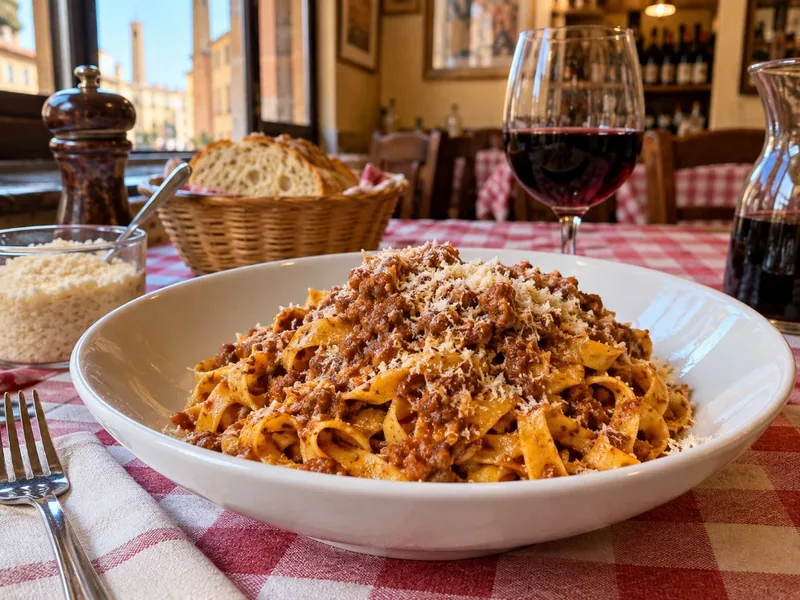
Why tagliatelle and not spaghetti?
Because the ragu was codified to dress the tagliatella. Spaghetti bolognese is a foreign invention, and Bologna's own mayor has said so.
The Chamber explains the 1982 deposit as a way to "dress the tagliatella with dignity", ten years after the pasta itself had been deposited naked. Fresh egg pasta has a rough surface and enough width to hold a meat sauce; dry spaghetti lets it slide off.
In March 2019 Mayor Virginio Merola told the CBC that spaghetti bolognese "doesn't actually exist", and that the city wants to be known for tagliatelle, tortellini and lasagne. In Bologna you will also meet ragu inside lasagne verdi and in sandwiches, but almost never on spaghetti. Our guide to what to eat in Bologna sorts the local dishes from the tourist ones.
Roll the tagliatelle by hand with a sfoglina, then eat it with ragu, wine and gelato.
Book thisWhat is the golden tagliatella of 1972?
The official measure of a Bolognese tagliatella, deposited at the Chamber of Commerce on 16 April 1972: about 8 mm wide once cooked.
On 16 April 1972 the Chamber and the Accademia deposited the "misura aurea", the golden measure of the authentic tagliatella alla bolognese. It was their first joint deposit, and the start of a series that, with the 2023 ragu, reaches 34 Bologna recipes.
The width usually quoted is 8 mm when cooked, described as 1/12,270 of the height of the Asinelli Tower. The Chamber's page confirms the date but not the millimetres. The same source debunks the story that tagliatelle were invented in 1487 for Lucrezia Borgia's hair; it seems to go back to an illustrator, Augusto Majani, in 1931. The Chamber's historic seat is Palazzo della Mercanzia, the Gothic loggia by the Two Towers where two of the city's food walks meet.
Where can you taste ragu on a Bologna food tour?
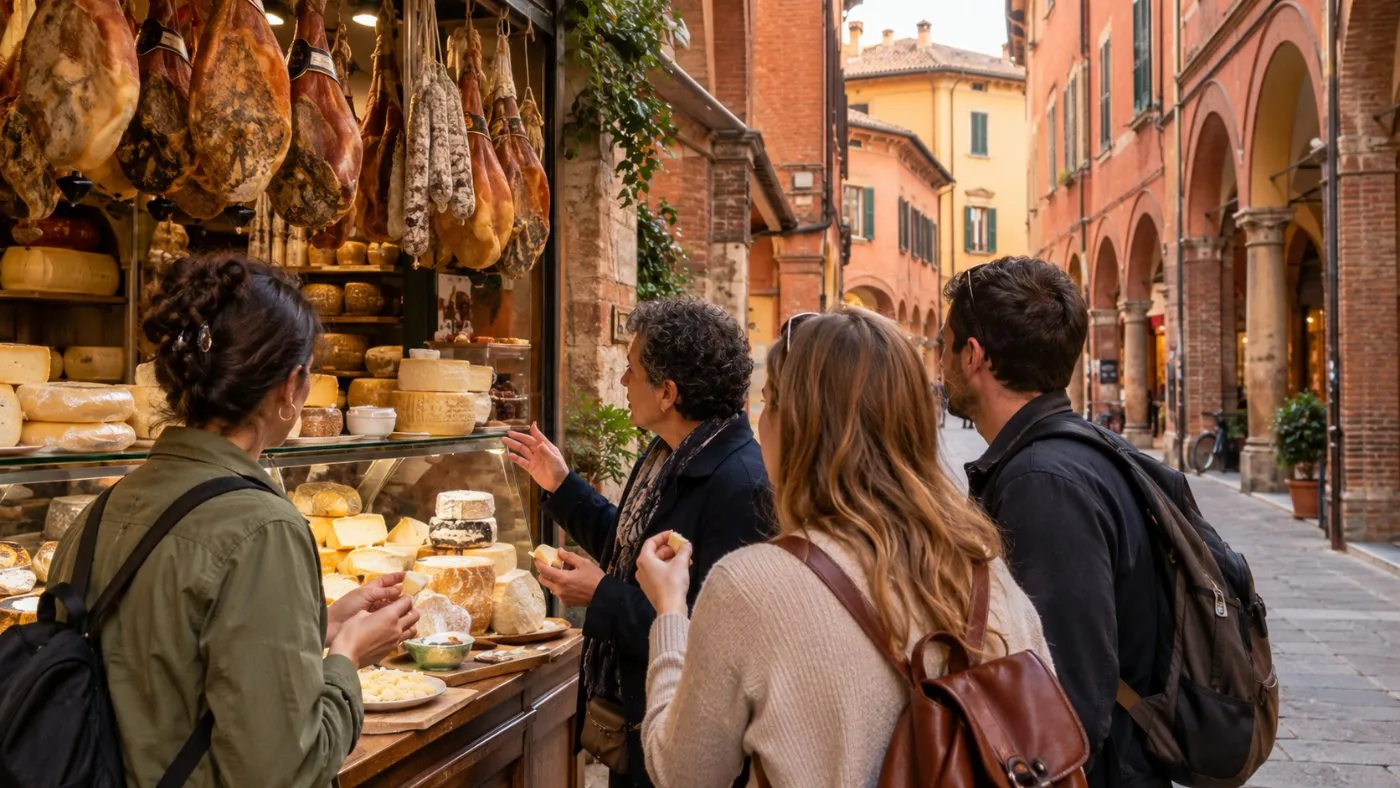
On the street food tour (in a sandwich), the 3-hour local food tour, and at the pasta class. Other walks serve fresh pasta but their listings do not always name the sauce.
Read the listings closely. The street food tour lists ragu sandwiches among its tastings. The 3-hour version of the local food tour with tastings lists two homemade pastas and ragu. The walking food tour takes you to a trattoria for tortellini and tagliatelle, and the dinner, wine and food walk has a seated fresh pasta course; neither listing says which sauce, so ask the guide if ragu matters to you.
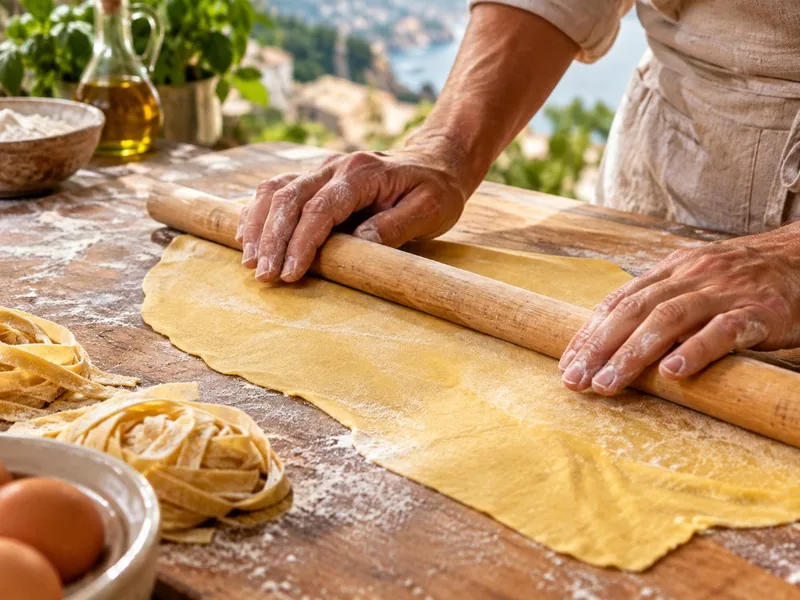
The pasta cooking class is the surest bet. You roll tagliatelle by hand with a sfoglina, no machines, and eat them with ragu. Be clear on one point: the class's ragu is made in advance by the hosts. You learn the pasta, not the sauce. A downloadable recipe file comes afterwards through the booking app, and the 2023 text above fills the gap at home.
| Tour | Where ragu appears | Length |
|---|---|---|
| Street food tour | Ragu sandwich among the tastings | 2 hours |
| Local food tour, 3-hour version | Ragu listed with two homemade pastas | 3 hours |
| Walking food tour | Tagliatelle in a trattoria; sauce not stated | 3 hours |
| Dinner, wine and food walk | Seated fresh pasta; sauce not stated | 3 hours |
| Pasta cooking class | Your own tagliatelle with ragu made by the hosts | 3 hours |
How do you cook ragu the 2023 way at home?
Soffritto in olive oil, add the pancetta and beef until they sizzle, wine, then tomato, cover and simmer for about two hours with hot broth as needed.
Following the classic order, render the chopped pancetta, then soften the finely chopped onion, carrot and celery in the oil. Add the beef and stir until it browns and crackles. Pour in the wine and let it evaporate. Stir in the passata and tomato paste, cover, and keep it at a lazy simmer, topping up with hot broth. If you use milk, add it halfway and let it cook away.
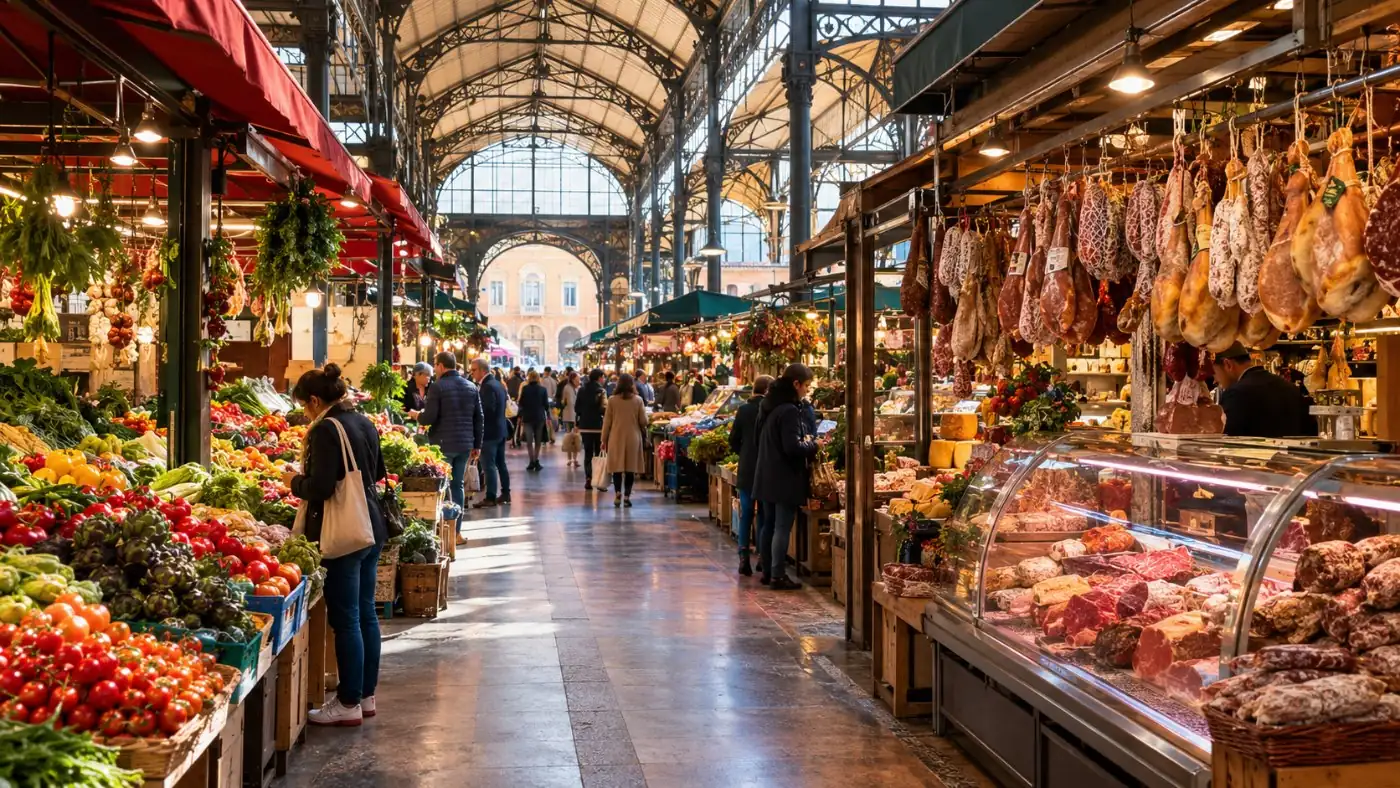
That is it. The patience is the recipe. Serve it on fresh tagliatelle with Parmigiano Reggiano on top, and nothing green. Buying the pasta rather than making it? Our Bologna food markets guide lists where the fresh pasta shops are.
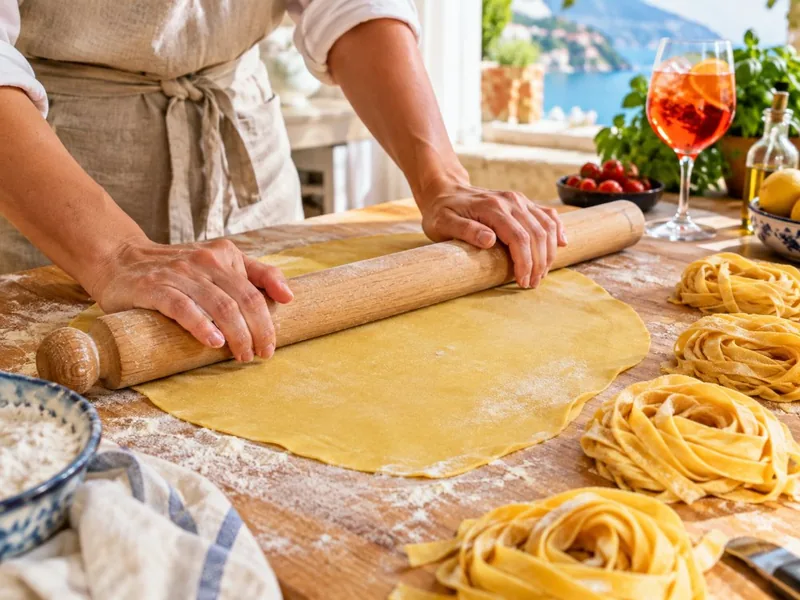
Learn the tagliatelle from a sfoglina, then eat them with ragu, Sangiovese, Parmigiano and a gelato with balsamic.
Book this Tour detailsFrequently asked questions
Was the official Bolognese ragu recipe changed?
Yes. The Accademia Italiana della Cucina deposited a renewed recipe at the Bologna Chamber of Commerce, with the notarial deed handed over on 20 April 2023. It replaces the 1982 version.
Does real Bolognese ragu have garlic?
No. The 2023 recipe excludes garlic, rosemary, parsley and other herbs and spices, as well as brandy, flour and smoked pancetta.
Does ragu alla bolognese have milk?
It can. Whole milk is optional in the 2023 recipe, added halfway through the cooking and reduced completely.
Do you make the ragu in the Bologna pasta class?
No. In the pasta cooking class you make tagliatelle by hand; the ragu is prepared in advance by the hosts and served with your pasta.
Ready to book
Choose your tour
Free cancellation up to 24 hours before on every option, and live availability on the booking page.
Pasta Cooking Class with Ragu, Spritz, Wine & Gelato
Roll your own tagliatelle with a sfoglina, then eat it
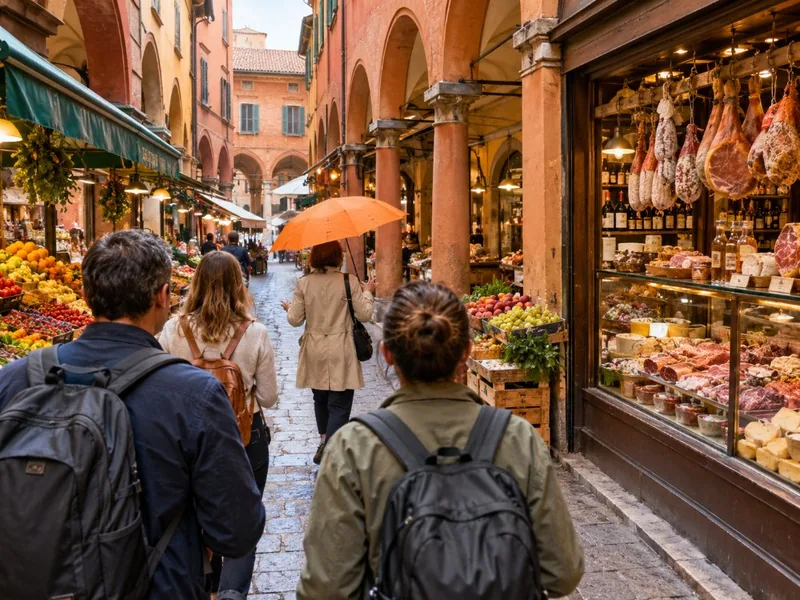
Walking Food Tour with a Local Expert
- 3-hour walk with a local guide
- Five food stops and wine along the way
- Mortadella, Parmigiano, balsamic, fresh pasta and gelato
Local Food Tour with Tastings and Wine
A 2-hour express or a 3-hour feast with a surprise dish